In a nutshell
- Reine is home to a few hundred residents who have chosen to stay in one of Norway's most remote and beautiful corners, building lives around fishing and tourism.
- Locals navigate months of darkness through community gatherings, indoor pursuits, and a deep connection to the natural rhythms of the Arctic, finding rhythm in what outsiders find isolating.
- The main town is pronounced SVOL-vair, the gateway to Lofoten Islands (LOW-foh-ten), where most visitors begin their journey north.
- Education and job opportunities have drawn younger generations away, while tourism has reshaped village economies and transformed quiet fishing hamlets into seasonal destinations.
- Despite their isolation, Lofoten villages maintain schools and medical care, though residents often travel to larger towns for specialized needs and university education.
Who First Settled These Remote Islands
The Lofoten Islands have been home to fishing communities for at least a thousand years, with evidence suggesting Norse settlers arrived around the 9th century to exploit the region's extraordinary cod stocks. Archaeological finds and medieval sagas indicate that Vikings did not rule Lofoten as a conquest, but rather colonized it as a resource frontier, establishing seasonal fishing camps that evolved into permanent villages. The earliest documented settlements grew around natural harbors where the Atlantic's winter cod migration made fishing not just viable but phenomenally productive, drawing people north despite the harsh climate.
By the Middle Ages, Lofoten's fishing reputation had spread across Scandinavia and beyond. Norwegian kings granted fishing rights and taxed the catch, recognizing the islands' economic value. Small clusters of farmsteads and fishing huts dotted the coastline, each positioned to maximize access to the sea. These early settlers developed techniques and knowledge that their descendants still use today, creating a continuous thread of maritime culture across more than a millennium.
The Dialect and Place Names of 68 Degrees North
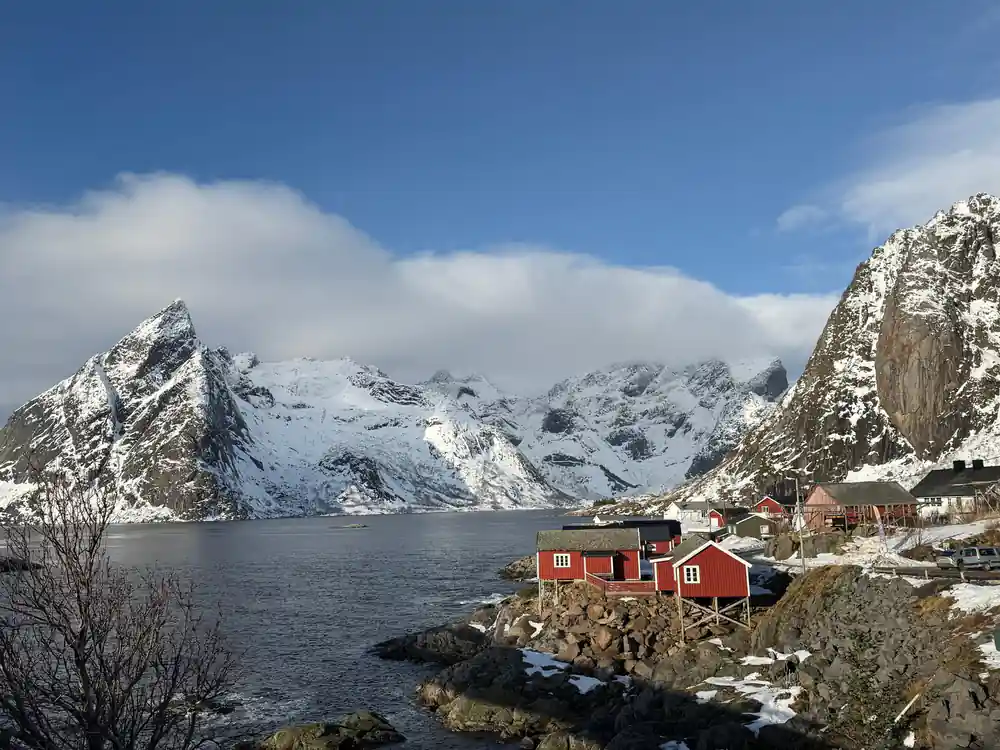
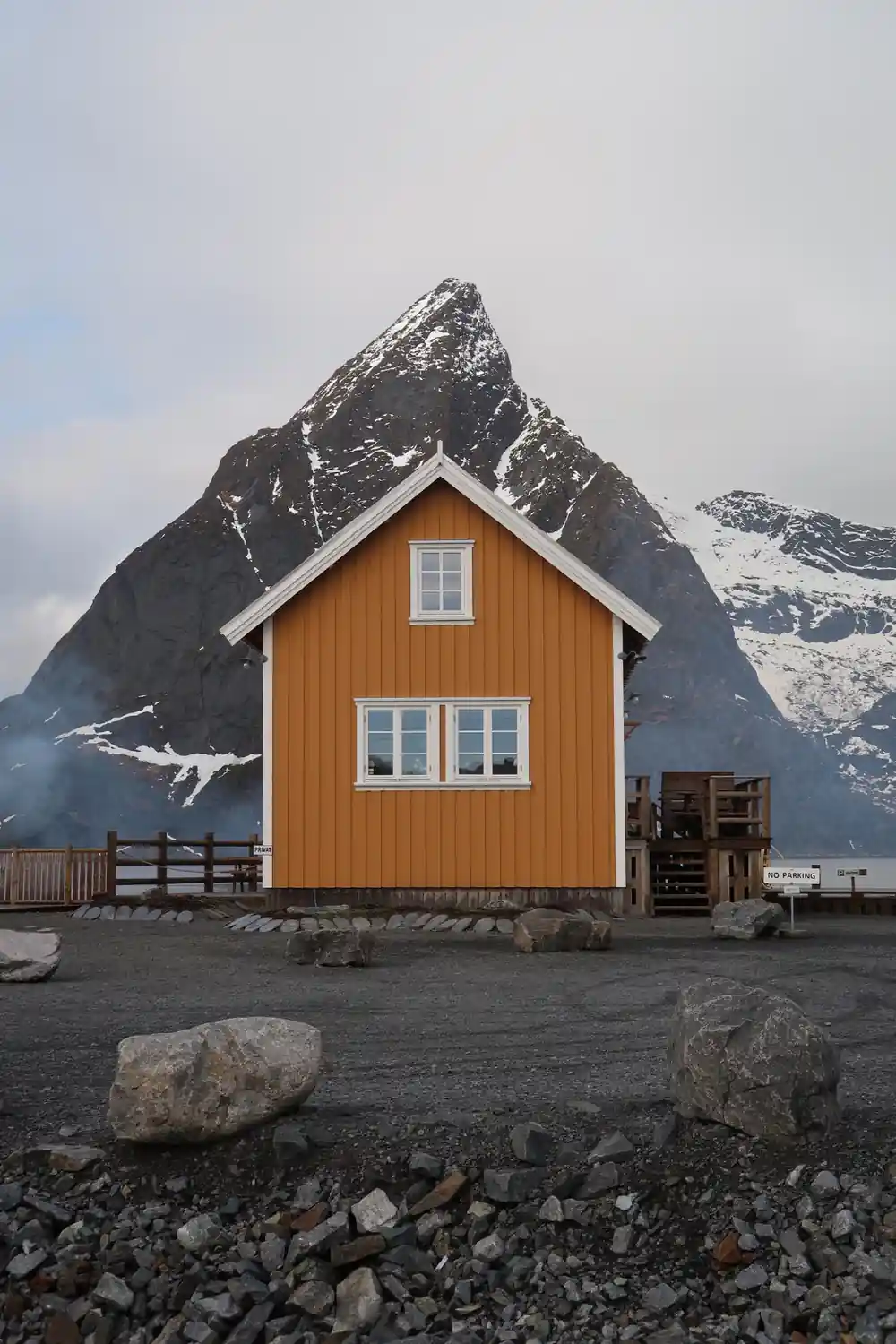
Listen closely to how locals pronounce Reine, the fishing village that sits as one of Lofoten's most photographed hamlets, and you'll hear a distinctive lilt shaped by centuries of isolation and maritime life. The Lofoten dialect belongs to the North Norwegian language group, characterized by melodic intonation and vocabulary rooted in fishing, weather, and seafaring. Place names throughout the islands tell stories in Old Norse: Å means 'river,' Hamnøy translates as 'harbor island,' and Sakrisøy carries the same -øy, 'island,' after the man who once held it, each name encoding the landscape's meaning to those who settled it.
The dialect has softened somewhat with modern communication and tourism, but older residents and fishermen still speak with pronunciations and expressions that younger mainlanders find distinctly regional. Words for specific fishing techniques, types of cod, and weather patterns have no direct equivalents in standard Norwegian, reflecting knowledge accumulated across generations. School curricula now include Lofoten dialect heritage, though linguists worry the youngest generation speaks it less fluently than their grandparents did.
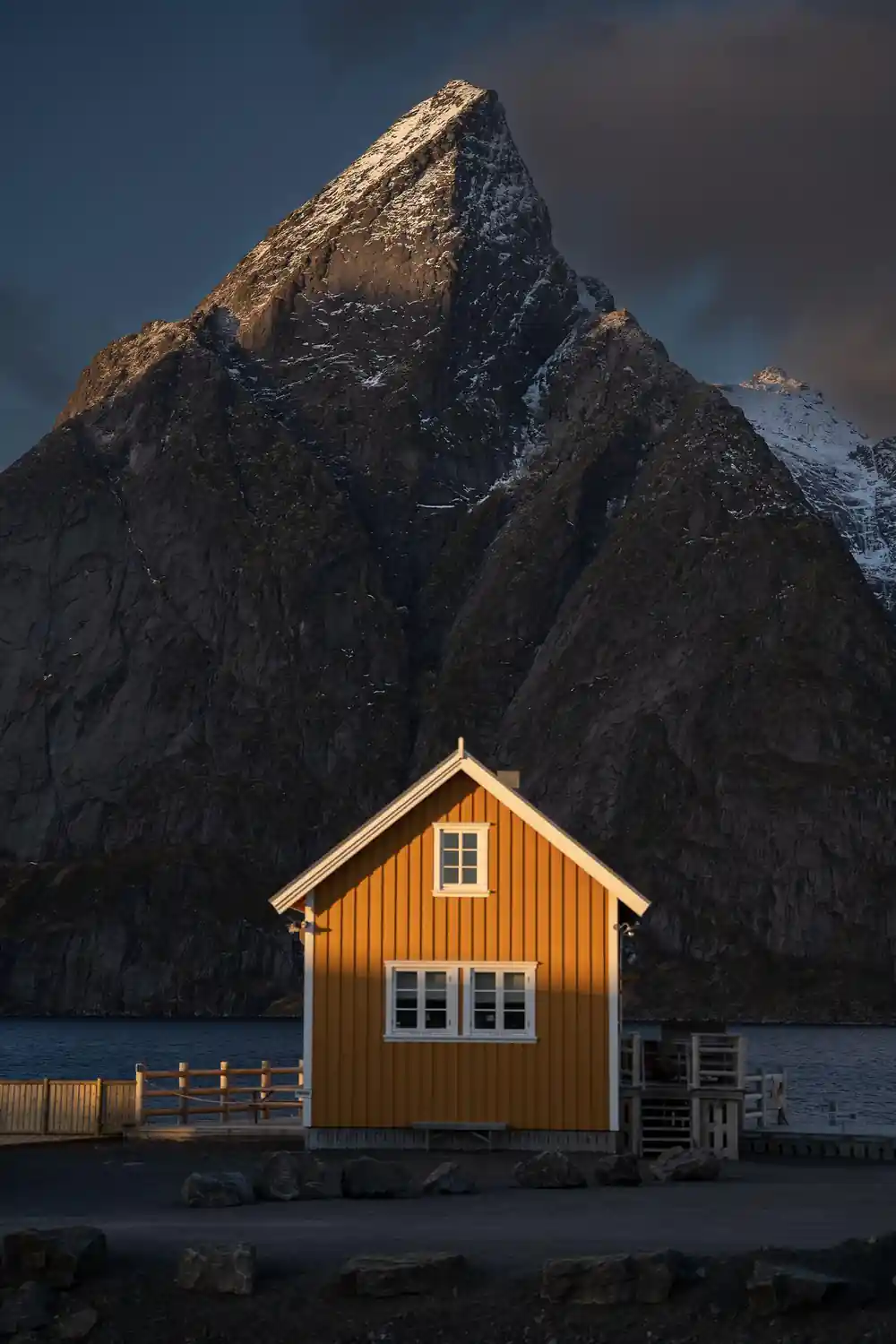
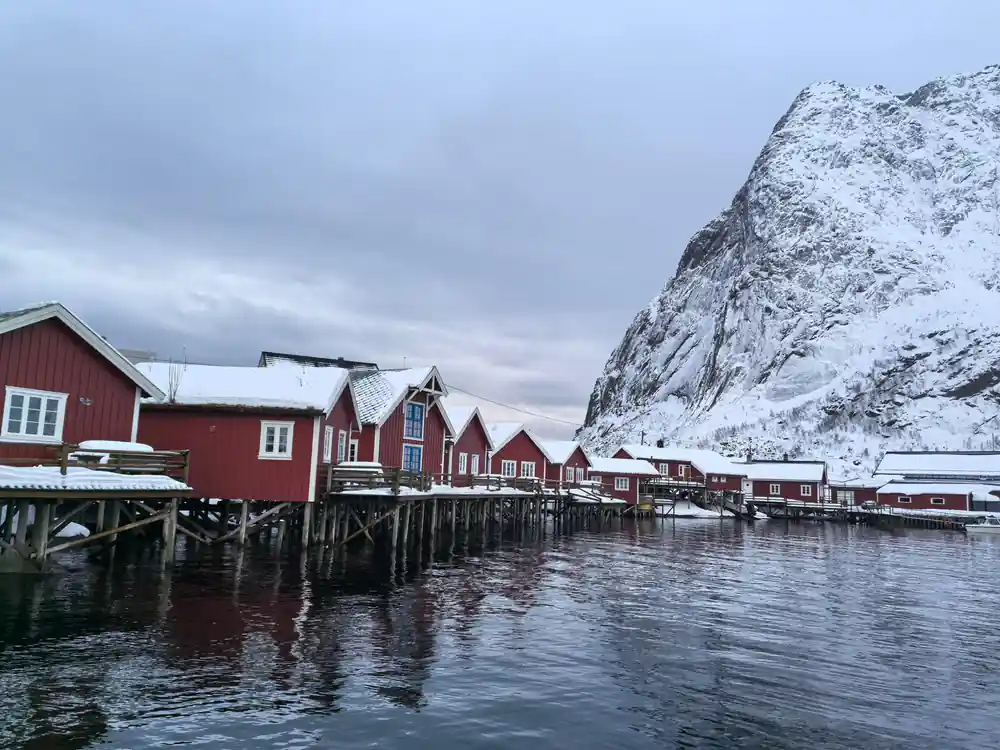
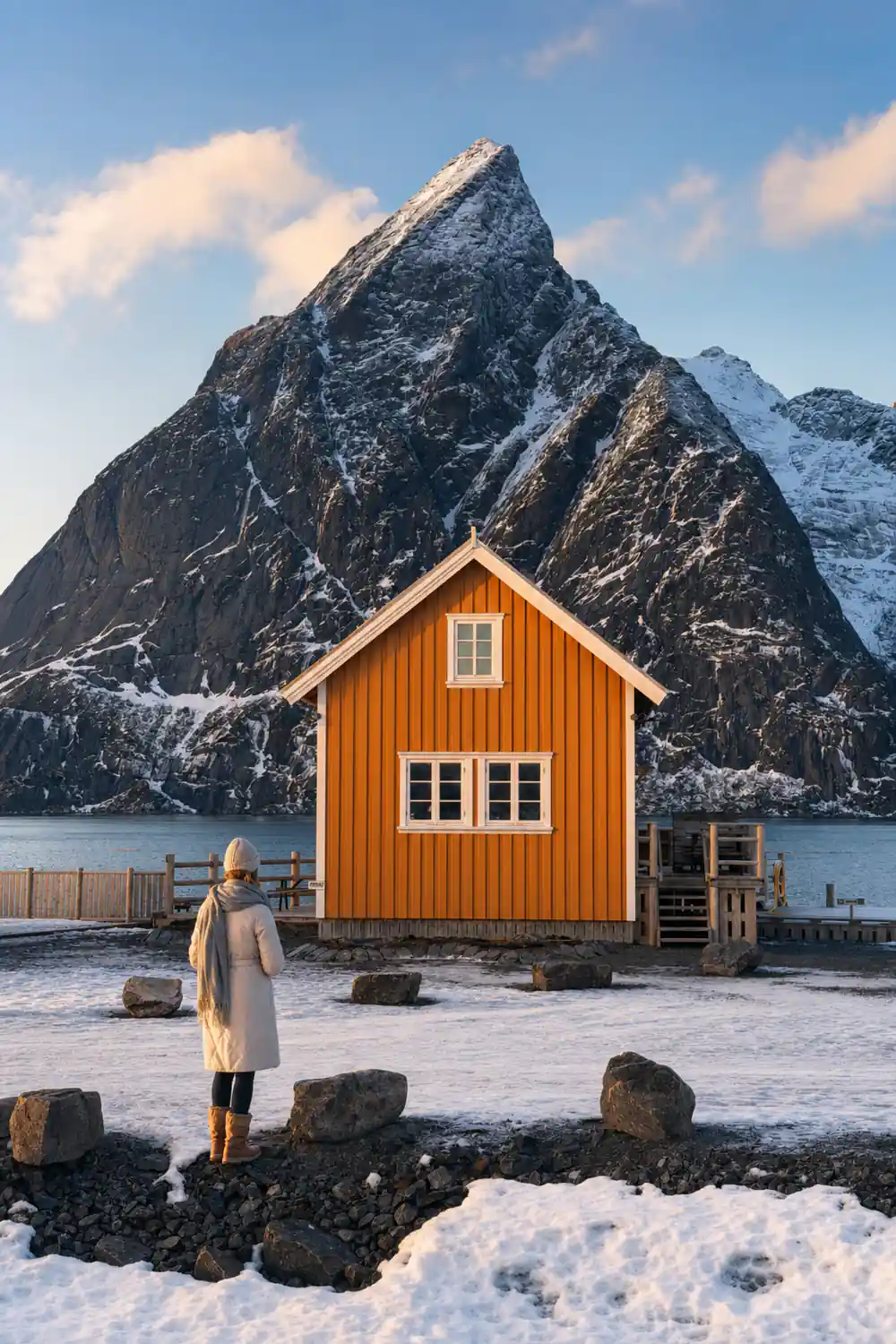
Golden light spills from cabin windows across winter snow
Surviving the Polar Night Without Daylight
From early December to early January, Lofoten residents experience the polar night, when the sun never rises above the horizon and only twilight illuminates the short midday hours. This extended darkness might seem unbearable, yet islanders have developed routines and psychological strategies that allow daily life to continue largely uninterrupted. Artificial lighting in homes and workplaces compensates for the missing sun, and locals emphasize that the darkness brings its own beauty: the northern lights dance overhead on clear nights, and the quality of available light takes on a particular clarity that photographers and artists prize.
Vitamin D deficiency and seasonal affective disorder do affect some residents, and health clinics stock supplements and light therapy lamps. Community life actually intensifies during winter months, with indoor social events, gatherings, and celebrations helping people pass the darkest weeks. The rhythm of work continues, with fishing still the primary livelihood, and many residents say they've grown so accustomed to the cycle that the returning sun feels as dramatic as its departure. Those who cannot adjust often move south, contributing to seasonal population shifts that have shaped island demographics.
Young People and the Pull Toward Mainland Life
Reine today has roughly 300 permanent residents, and many islanders will tell you that figure would be far smaller without tourism jobs and the recent digital economy. Young people who grow up in Lofoten face a fundamental choice: stay in a place with limited job options outside fishing and tourism, or leave for cities where universities, hospitals, tech companies, and cultural institutions offer more diverse careers. The pattern is consistent across small island communities worldwide: each generation sees some young adults depart, particularly those with higher education or specialized skills.
Parents often encourage education on the mainland, knowing that return migration happens, but not for everyone. Remote work has changed the calculus somewhat, allowing some young professionals to base themselves in Lofoten while working for Oslo or international firms. Cultural factors matter too: settlement patterns show that young people with family ties to fishing or tourism are more likely to stay, while those from non-maritime backgrounds tend toward relocation. The islanders who remain often express pride in their choice and deep attachment to the landscape, but they acknowledge the economic pressures that make staying increasingly difficult for those without independent means.
24,000
During the polar night, Lofoten's 24,000 residents go about four weeks without the sun clearing the horizon.
Schools, Doctors, and Essential Services in Remote Lofoten
Lofoten has schools serving the islands' young people, though many families face a difficult decision when their children reach secondary school age. Primary education happens locally in the larger villages, but upper secondary means Aust-Lofoten in Svolvær or Vest-Lofoten in Leknes, which for many families means a long daily bus ride or lodging in town during the week. Healthcare follows a similar pattern: Nordlandssykehuset Lofoten, the islands’ own hospital at Gravdal near Leknes, handles routine needs and emergencies, but serious medical cases require evacuation to hospitals in Bodø or Tromsø, a process that can take hours depending on weather and sea conditions.
The Norwegian government maintains these services as part of its commitment to rural settlement, but staffing remains perpetually challenging. Doctors and nurses recruited from the mainland often serve temporarily before returning to larger communities, creating continuity issues. Telemedicine has expanded, allowing remote consultations for many conditions. For residents, this infrastructure represents both a safety net and a reminder of isolation. Those with chronic conditions or disabilities sometimes relocate to ensure reliable care access, contributing to the demographic shifts that smaller villages experience.
How Tourism Has Transformed Village Life
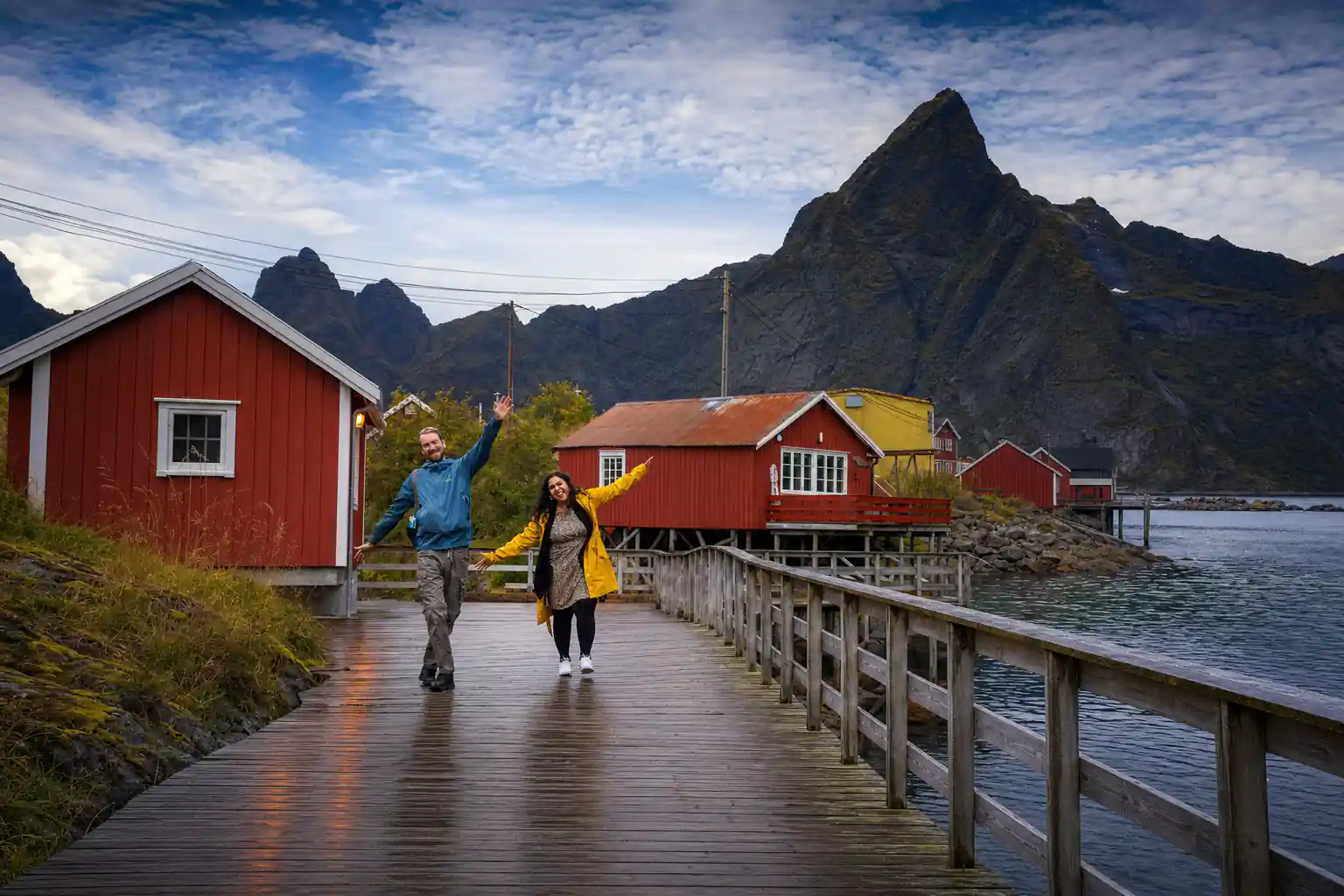
Twenty years ago, Lofoten's fishing villages were quiet, working communities where outsiders rarely ventured. Today, they have become destinations, with tours like the 9-hour minivan journey through Å, Reine, and Hamnøy bringing hundreds of visitors weekly during the summer season. This transformation has created jobs in hospitality, guiding, photography, and hospitality businesses that didn't exist before, providing economic lifelines for young people considering whether to stay. Several residents have shifted from fishing to tourism entrepreneurship, opening restaurants, galleries, lodges, and experience-based businesses that capitalize on the islands' natural beauty and cultural heritage.
The changes are not uniformly welcomed. Increased boat traffic, pollution concerns, and overcrowding at photogenic locations like Reine have prompted local discussions about sustainable tourism limits. Housing prices have risen sharply as mainlanders and international investors purchase properties, making it harder for young islanders to afford homes. Yet tourism has also funded infrastructure improvements, broadband expansion, and cultural preservation projects that benefit residents. Villages have negotiated a precarious balance: accepting enough tourism to sustain their population and economies, while protecting the character and quietness that makes them worth visiting. Local guides and tour operators have become voices advocating for responsible visitation, educating travelers about respecting islanders' daily lives.
Life Between Land and Sea: The Lofoten Way
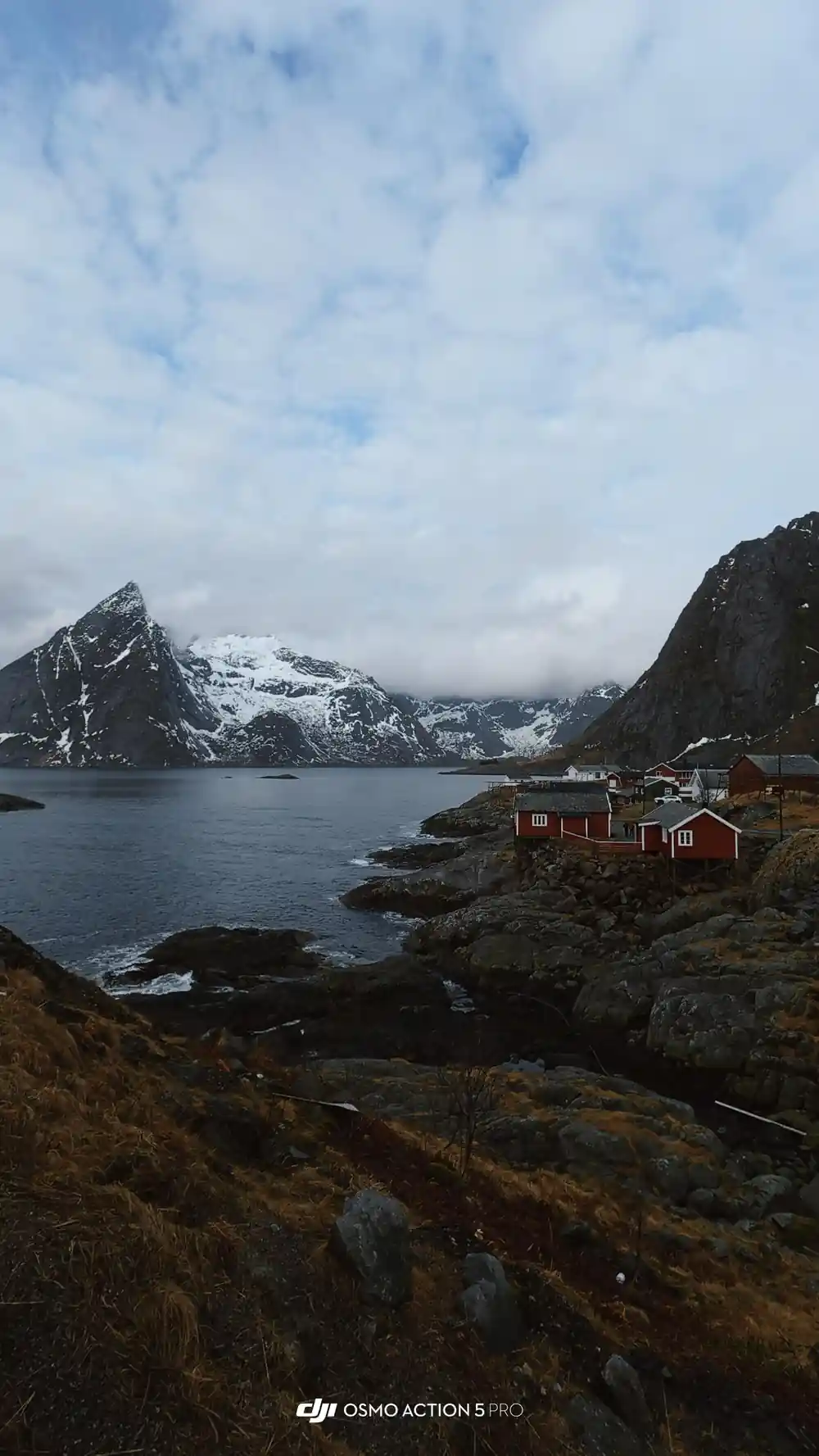
To understand Lofoten, you must grasp that these islands are fundamentally maritime places, where the boundary between land and ocean is the organizing principle of existence. Fishing remains central to the islands' identity and economy, even as tourism grows. The dramatic landscape of jagged mountains meeting deep fjords shaped the people who settled here, selecting for those with particular skills, temperament, and willingness to endure hardship. Modern islanders inherit not just geography but cultural values emphasizing self-reliance, weather-reading, and respect for the sea's power.
A visitor spending a day on a guided tour sees spectacular scenery and charming villages, but living here means contending with storms, isolation, darkness, and economic uncertainty. The people who choose to stay despite these challenges often speak of an indefinable attachment to place, to community, and to a way of life that connects them to ancestors and landscape in ways that mainland living cannot replicate. As globalization and digital connectivity bring change, Lofoten residents are consciously working to preserve what makes their islands distinct while adapting to survive in the modern world.
Hear Lofoten's stories from someone who lives here
from US$209Reserve now & pay later
Your questions, answered
How do you pronounce Reine?
How do you say Svolvær?
How is Hamnøy pronounced?
How many people live in Reine?
Do children attend school this far north?
Did Vikings settle the Lofoten Islands?
How do locals survive the polar night?
What language do Lofoten people speak?
Why are young people leaving these villages?
Has tourism changed village life here?
-

★★★★★
Our guide shared stories about families who've lived here for generations. It brought the villages to life.
 Stuart H.
-

★★★★★
He explained how people survive the polar night and winter storms. Real insights you won't read in a guidebook.
 Oscar N.
-
★★★★★
Learning about settlement history from someone who actually lives here made all the difference to the experience.
 Charlotte P.
-
★★★★★
Our guide knew everyone in Reine and told us how tourism has changed the community over decades.
 Isla L.
-
★★★★★
He spoke about local dialect and culture with genuine passion. You could tell he belonged to these islands.
 Frank G.
-
★★★★★
The stories about why young people leave and who stays gave me real perspective on village life here.
 Uwe S.
-
★★★★★
A local guide who actually understands the challenges of living at this latitude. Incredibly authentic.
 Susanne H.
-
★★★★★
He talked about schools, doctors, and how communities function when isolated. Eye-opening and honest.
 Luis M.
-
★★★★★
Stories about the first settlers and Viking history made the landscape feel like a living book.
 Lucía K.
-
★★★★★
Having a real Lofoten resident as our guide transformed the tour from sightseeing into understanding.
 Alicia S.