In a nutshell
- At the terminus of the E10 highway sits Å, a remote fishing settlement whose single-letter name marks the end of the road in Lofoten.
- A powerful tidal whirlpool between islands that captivated writers Edgar Allan Poe and Jules Verne, now visible from the tour route.
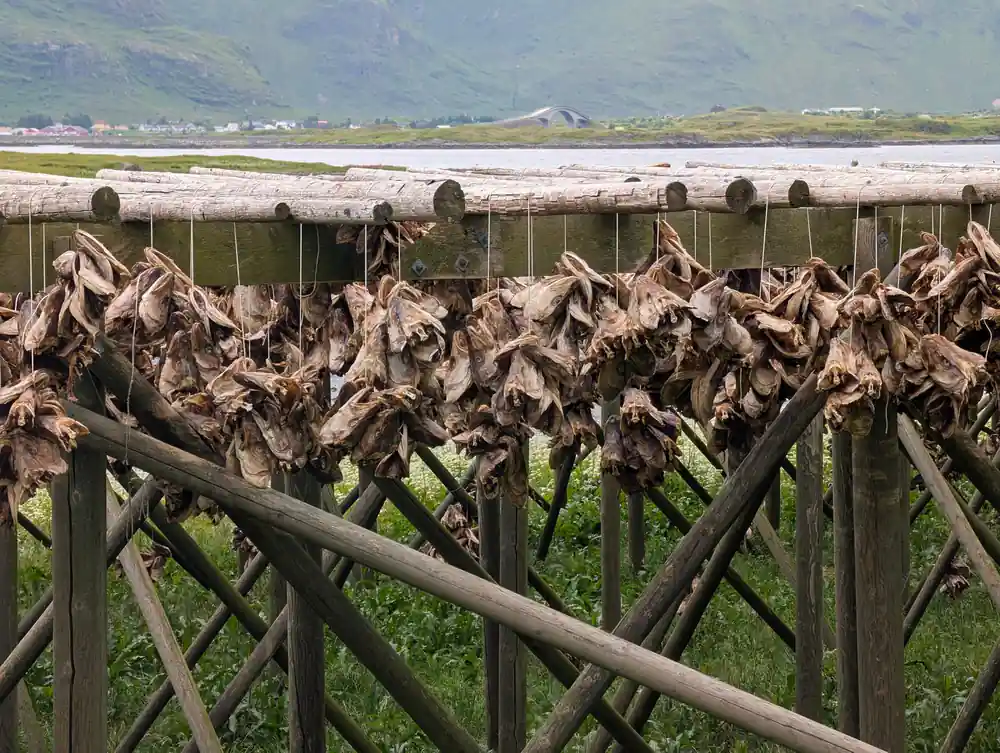
- Explore how cod is dried on traditional wooden racks and learn why Lofoten's stockfish became a prized export across centuries of trade.
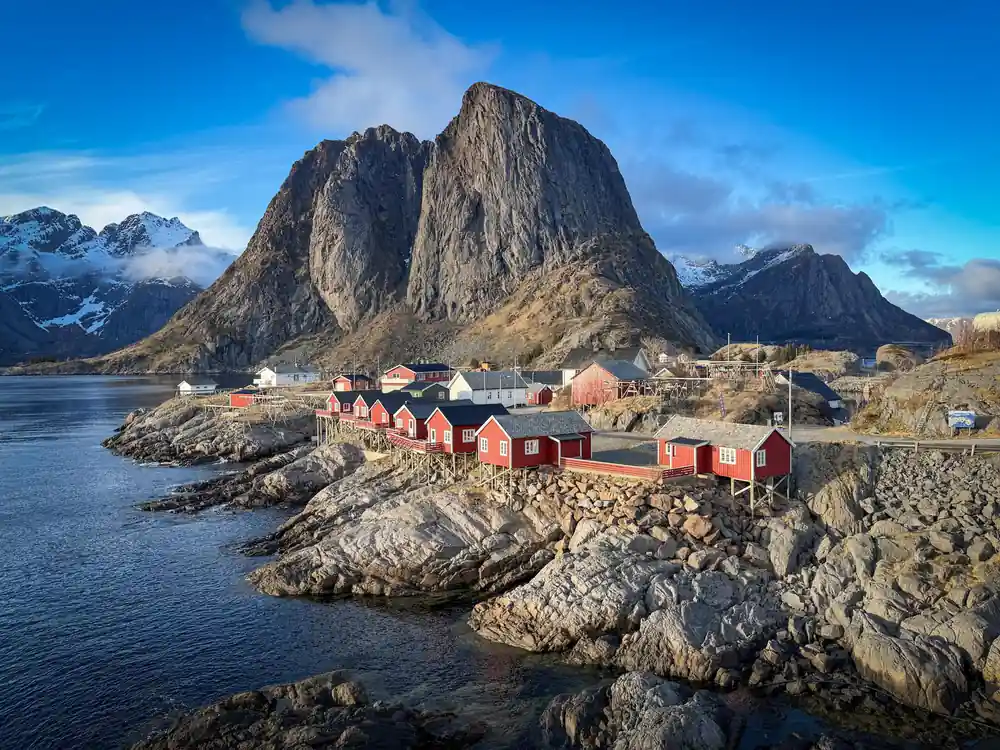
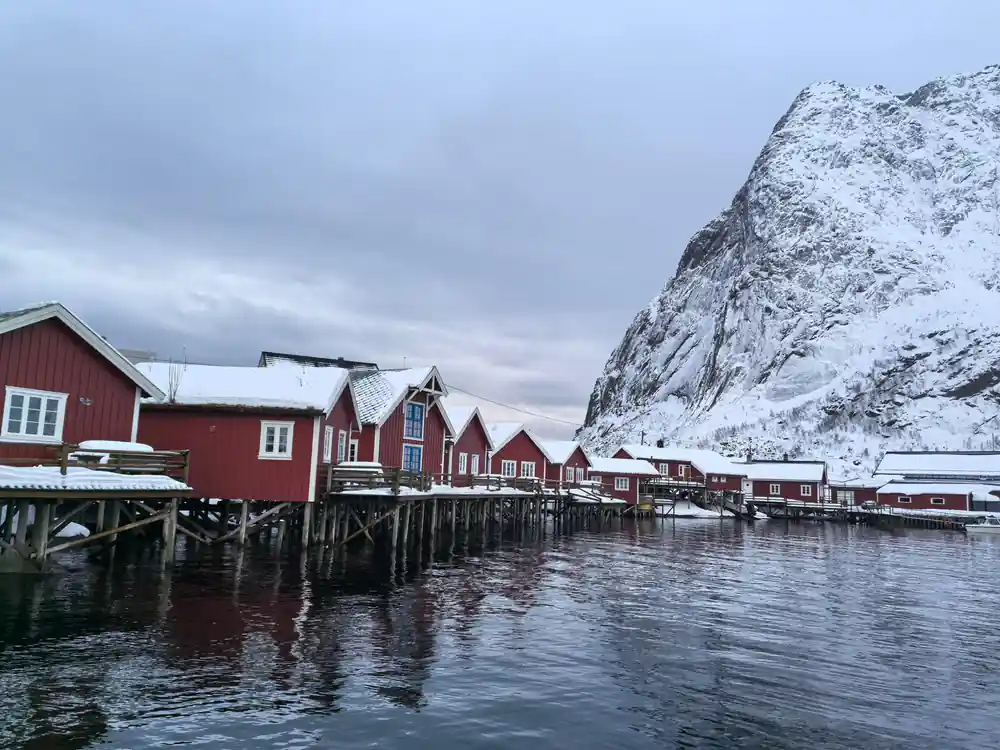
- Step into the historic lives of visiting fishermen who lived and worked in these iconic red and yellow waterfront cabins during the season.
- Å's historic bakery carries on centuries-old baking methods, offering a taste of authentic Norwegian craft in Norway's northernmost settlement.
Why Å Is Named After a Single Letter
Å i Lofoten sits at the southern terminus of the E10 highway, a village so small and so distinctly placed that its name makes perfect sense: it is simply the last letter of the Norwegian alphabet, marking the end of the road. The name is a coincidence: Å is Old Norse for a small river, after the stream that runs through the village, and it happens also to be the last letter of the alphabet at the place where the road stops. This 9-hour minivan tour from Svolvær takes you to this remarkable endpoint, where you'll discover how a single letter has come to represent an entire way of life shaped by isolation, fishing tradition, and the sea.
The village's name also reflects an older Scandinavian practicality: Å derives from the Old Norse word for river, and several small streams flow through the settlement. Over centuries, locals shortened references to 'the river village' to simply Å, and the name stuck. Today it serves as both literal and figurative punctuation mark on Lofoten's map. Walking through Å during your tour, you'll see how this naming convention has become a point of pride, instantly identifying the village to travellers and fishermen arriving from across Norway.
The Moskstraumen: A Maelstrom That Captivated Writers
Between the islands of Moskenesøya and Værøya lies the Moskstraumen, one of the world's most powerful tidal currents. At certain times of day, the meeting of tidal flows creates a violent maelstrom visible from the shore, with waves that can reach heights of several metres and whirlpools that have fascinated and terrified seafarers for centuries. Edgar Allan Poe featured this phenomenon in his 1841 short story 'A Descent into the Maelstrom,' drawing on accounts of its raw power. Jules Verne also referenced the Moskstraumen in his writings, cementing its place in literature as a symbol of nature's untamed force.
Your tour guide will explain how local fishermen learned to navigate these waters, timing their journeys to avoid the maelstrom's most violent phases. From certain vantage points near Å and Reine, you can observe the current's effects on the water, watching as the sea churns with an almost hypnotic energy. The Moskstraumen remains a powerful reminder of why Lofoten's fishing communities developed such deep knowledge of their environment, and why the skill of reading tidal patterns was essential to survival.
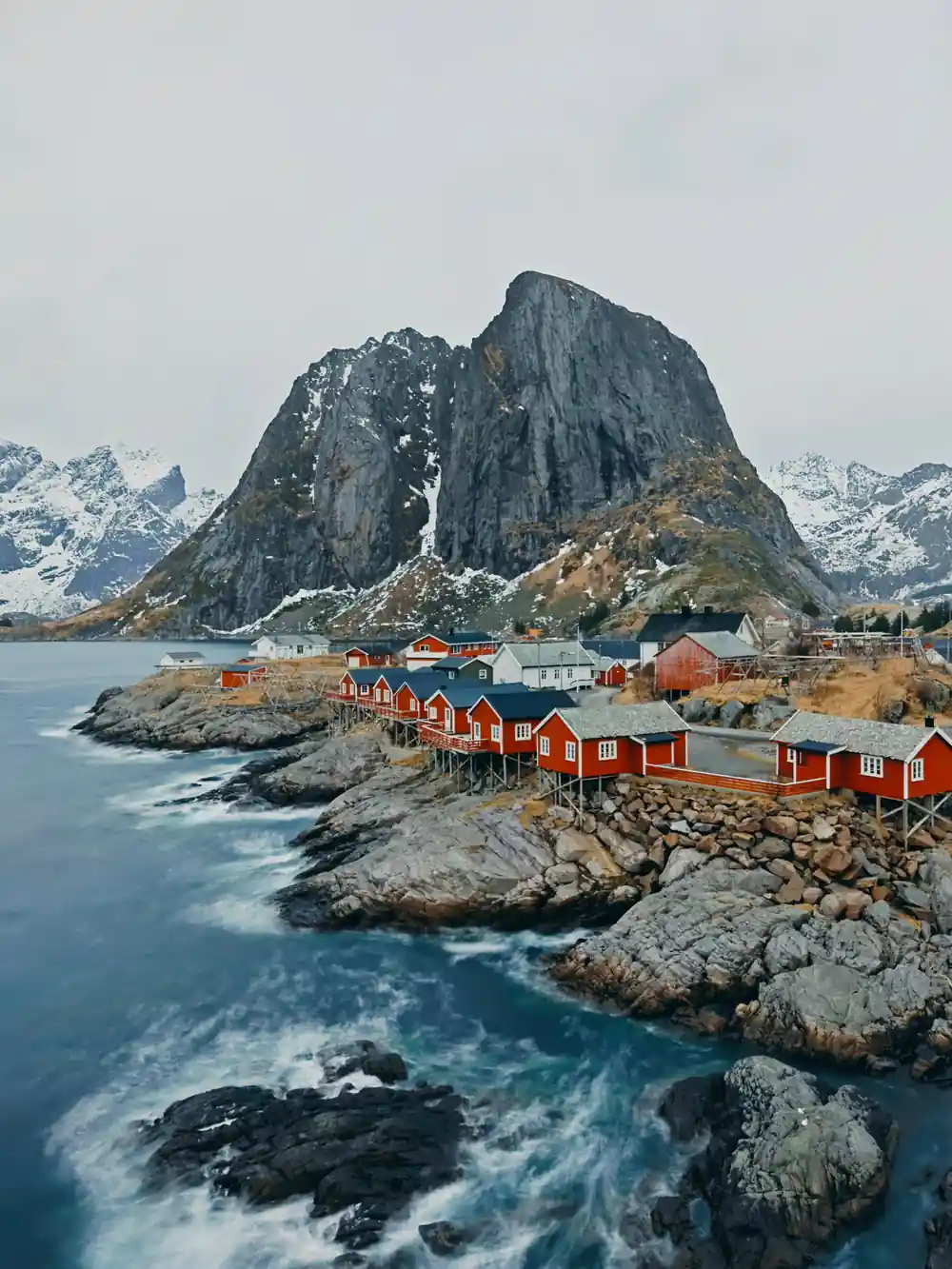
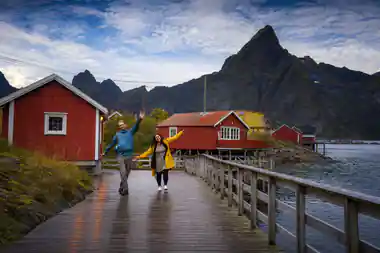
Red rorbu cabins frame the northern light at Lofoten's end
Stockfish: The Ancient Trade That Built Lofoten
For over a thousand years, cod caught in Lofoten's waters has been dried on wooden racks to create stockfish, a preserved product that transformed Lofoten from a remote island cluster into a centre of international commerce. The process is simple but labour-intensive: fresh Atlantic cod is split, gutted, and hung on large wooden drying racks called 'hjell,' where the cold Arctic air and steady wind preserve the fish without salt or smoke. A single fish can lose up to 80 percent of its weight during drying, creating a product that is shelf-stable, lightweight, and dense with protein. This made stockfish invaluable to maritime traders, explorers, and armies throughout Europe.
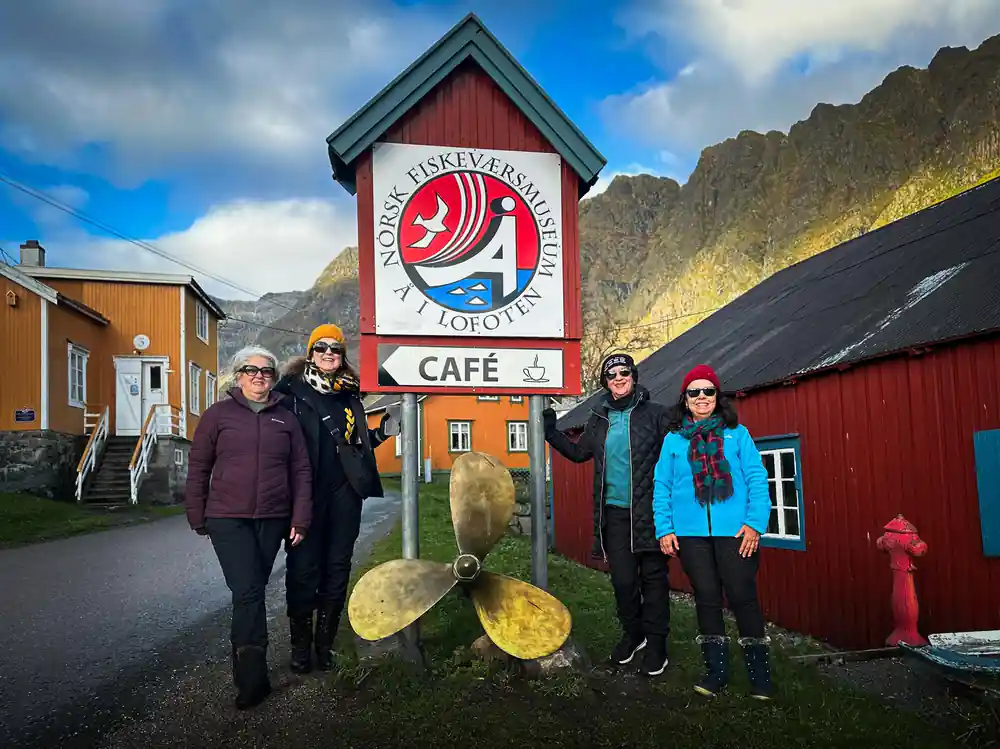
Today, Lofoten stockfish is exported primarily to Italy, where it remains a cornerstone of Mediterranean cuisine under the name 'stoccafisso.' Your 30-minute stop in Å leaves the Stockfish Museum a few steps away, where you'll see the traditional drying racks still in use and learn how this centuries-old trade shaped the region's economy. The museum displays the tools, techniques, and historical records that document how cod fishing and stockfish production created the wealth that built Lofoten's villages. You'll walk past active drying racks where cod hangs in the same way it has for generations, a living connection to this ancient trade.
The Historic Bakery and Å's Culinary Traditions
In the heart of Å stands one of Lofoten's oldest continuously operating bakeries, a place where bakers have kept the traditional methods to produce bread that reflects the island's fishing culture. The bakery is known for its traditional sourdough and hardtack, dense breads that were essential provisions for fishermen heading out to sea for weeks at a time. The sourdough culture has been maintained continuously, passed from baker to baker, making it one of the oldest living starters in Norway. Your light Norwegian snack during the tour may include samples from this historic bakery, giving you a taste of Lofoten's culinary heritage.
The bakery represents Å's commitment to preserving traditions even as modern life changes around it. Visitors often stop here to purchase fresh bread and pastries, and during your 9-hour tour, you'll have time to explore its shelves and speak with the bakers about how they maintain these methods. The building itself is a heritage structure, its timber walls weathered by salt air and its interior decorated with photographs and documents spanning generations of baking.
4
Stockfish hangs on wooden racks in Å for up to four months, transformed by Arctic wind and sea air into Lofoten's prized export.
Rorbu: Life in a Fisherman's Cabin
Along the fishing harbours of Reine and throughout Lofoten's villages stand rorbu, small timber cabins built on the water's edge or on stilts above shallow bays. These structures were designed as temporary housing for seasonal fishermen who travelled from across Scandinavia to participate in the winter cod fishery, which peaks between January and March. A typical rorbu consists of a single large room where fishermen slept, cooked, and stored their gear, with minimal insulation and no running water in the oldest examples. The cabins were owned by merchants or boat captains, who rented them to fishermen at rates that typically included part of the catch as payment.
During your tour from Svolvær, you'll see these iconic red-painted cabins reflected in the water, particularly around Reine and Hamnøy. Modern rorbu have been converted into tourist accommodation, but many retain their original character and simplicity. Your guide will describe what life was actually like for visiting fishermen: the brutal cold, the dangerous work, the camaraderie built during long nights, and the economic desperation that drove men to endure such conditions for seasonal wages. Some rorbu are now museums or cultural centres, preserving the material culture of this fishing heritage and telling the stories of the men who lived and worked in these humble spaces.
Reine: The Jewel of Lofoten's Landscape
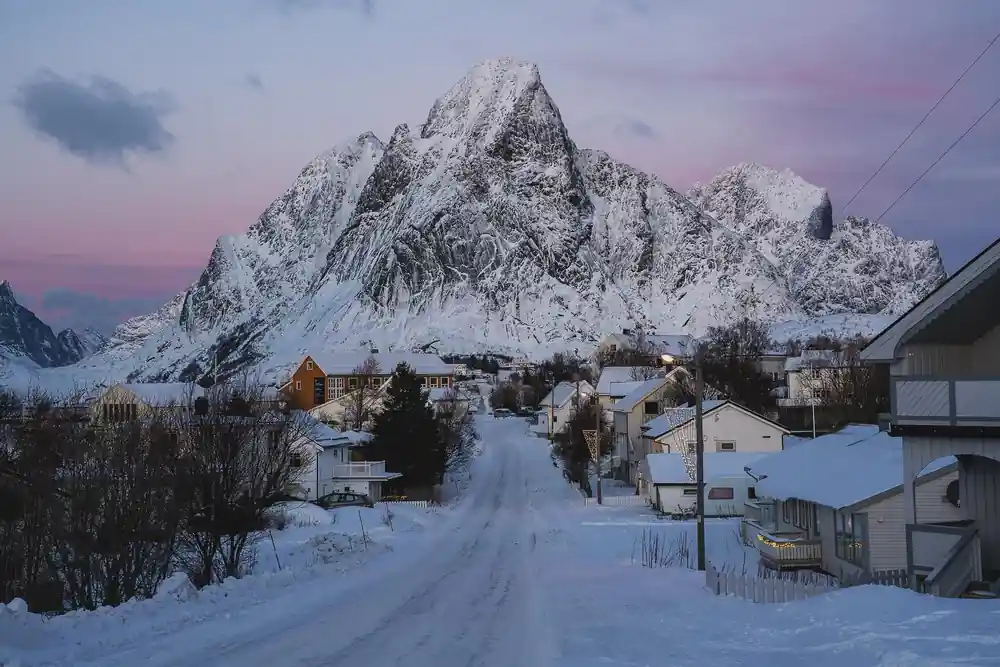
Reine is often described as the most beautiful village in Lofoten, and your full-day minivan tour includes substantial time here to explore its steep-sided natural harbour, colourful wooden buildings, and dramatic mountain backdrop. The village clings to the shoreline between towering granite peaks, creating a composition that has drawn photographers and artists for decades. Reine's prosperity came directly from its position as a natural fishing harbour, sheltered from the worst Arctic storms while offering direct access to the rich cod grounds. The village's architecture reflects this history: merchant houses stand near fishermen's cottages, and old storage buildings have been converted into galleries and restaurants.
With your local English-speaking guide, you'll learn how Reine developed from a seasonal fishing station into a permanent community, and how fishing traditions persist even as tourism now drives much of the local economy. The region's maritime museums are elsewhere: Lofotmuseet at Kabelvåg near Svolvær, and the fishing village and stockfish museums at Å. You'll have time to walk the waterfront, visit the shops and cafes, and photograph the rorbu cabins that seem to float on the water. Your guide will point out details in the architecture and explain the seasonal rhythms that still govern life here, from the winter fishing season to summer tourism.
A Full Day at a Relaxed Pace Through Lofoten's Villages
This 9-hour tour is designed not as a rushed collection of photo stops but as a genuine immersion in Lofoten's character, with your comfortable 9-seater minivan allowing easy movement between villages and unhurried time at each location. The drive itself becomes part of the experience: your guide provides historical context and local stories as you travel past fjords, fishing villages, and dramatic mountain scenery. You'll stop at scenic overlooks and smaller settlements beyond the main tourist circuit, seeing how Lofoten's communities vary and how geography has shaped each village's development and character.
Included in your tour are hot tea or a special Norwegian drink served in thermos cups, allowing you to warm up during outdoor stops, plus a proper meal break where you can sit down and eat properly rather than grab food in transit. Your guide will recommend local restaurants or help you find provisions, and the pace allows for conversation and questions. You'll depart from Valgata 6 in Svolvær in the morning and return by evening, with pickup available in either Svolvær or Leknes. This unhurried approach means you experience Lofoten as travellers once did: moving slowly enough to notice details, to speak with locals, and to understand why these remote islands have sustained communities for over a thousand years.
Stand at Norway's End of the Road
from US$209Reserve now & pay later