In a nutshell
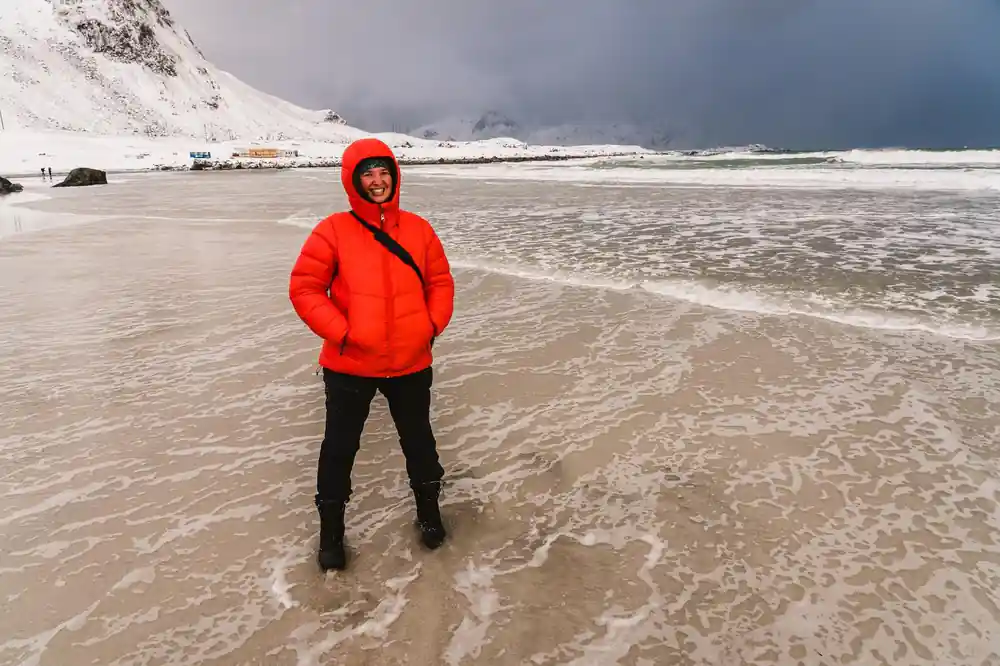
- Pack a waterproof outer jacket rated for Arctic wind. Sea spray and sudden gusts are constant in Lofoten.
- Wear footwear with aggressive tread for wet rock and beach walks. Slippery surfaces are unavoidable on this route.
- Winter requires 3-4 thermal layers under your shell. Summer needs only 1-2. The minivan is heated, but you step out into the wind at every stop.
- If touring November through March, microspikes or ice grips for your boots prevent slips on frozen terrain and icy paths.
- Protect against wind chill and sea reflection. Even cloudy days demand sunglasses; polar light bounces off water and rock year-round.
Outer Layer: Waterproof Jacket for Lofoten Wind
Lofoten's weather moves fast. A 9-hour day in the islands means exposure to wind that funnels between peaks, rain that arrives without warning, and sea spray that reaches you even when you're not at the water's edge. Your outer shell must be a hardshell or hybrid jacket, not a soft fleece or down parka. Look for a three-layer Gore-Tex construction or equivalent; two-layer fabrics fail in sustained wet conditions. The jacket should have a high collar that closes snugly around your neck, sealed seams (taped or welded, not glued), and pit zips so you can vent heat during the van's stops and walks without removing the whole layer.
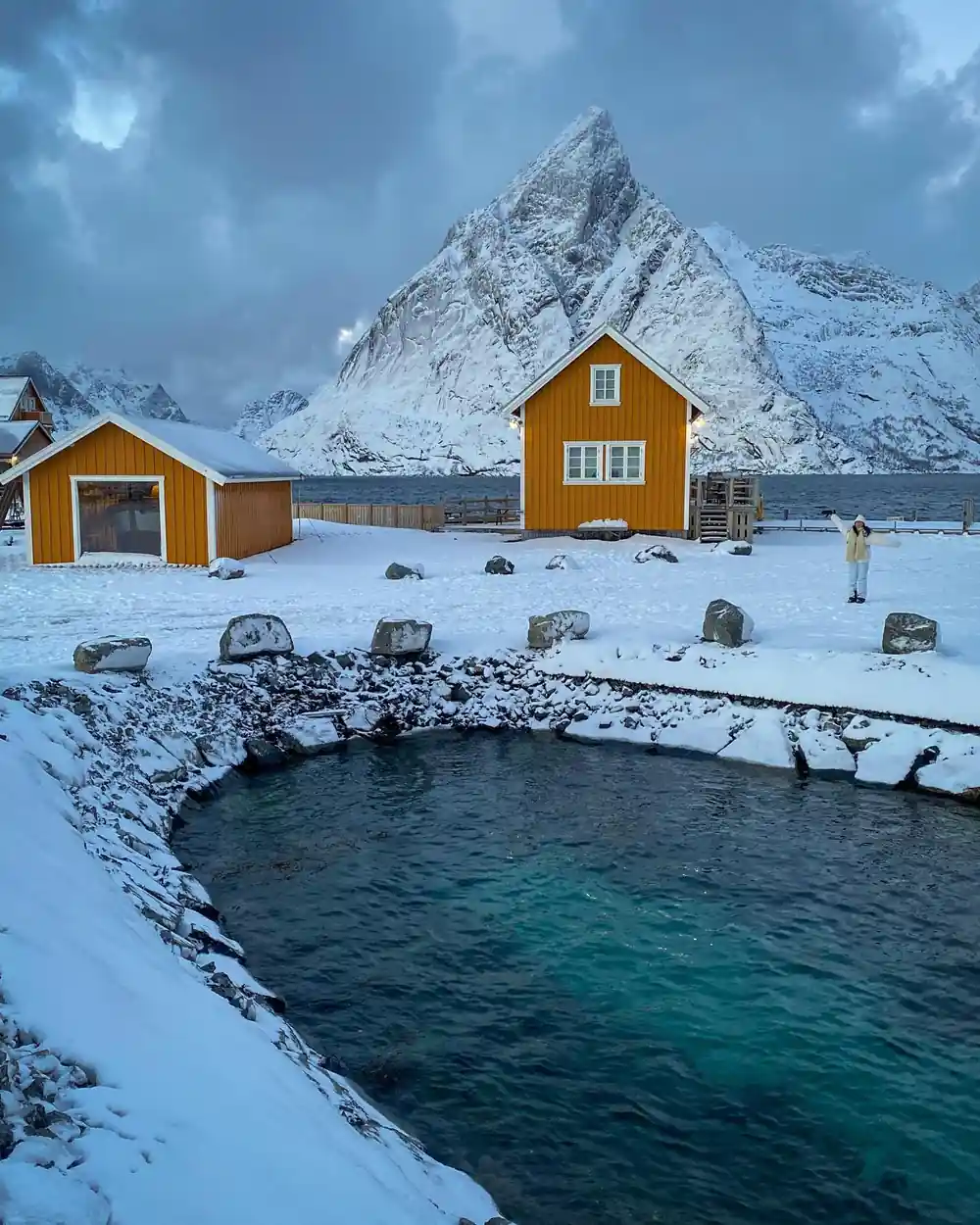
Fit matters more than weight. A jacket that binds across the shoulders or rides up when you raise your arms will chafe after several hours and restrict movement when you're climbing wet rocks or steadying yourself on uneven ground. Test the jacket by raising both arms overhead and walking a few steps. The hem should stay at your hips. Colour is practical too: bright yellow or orange makes you visible in flat Nordic light and easier to locate in photos taken across Lofoten's scattered villages. Pack the jacket in the minivan rather than wearing it the entire time; you'll change layers multiple times as you move in and out of the vehicle, walk the beaches near Reine and Hamnøy, and stand on the rocks at Sakrisøy.
Footwear for Wet Rock and Beach Sand
Lofoten's iconic villages sit on or beside the sea, and the ground underfoot is rarely dry or stable. Wet rock is slick enough to slide on, even when you think you have grip. Beach sand pulls at your feet and loads your ankles. Your footwear must handle both. Hiking boots with a stiff midsole and aggressive Vibram-type tread are the foundation; they prevent ankle roll on loose rock and provide enough grip on wet surfaces to keep you upright. Waterproof linings or gaiters are essential, because you will step into tide pools, mist will soak the leather, and sea spray travels much farther than you expect.
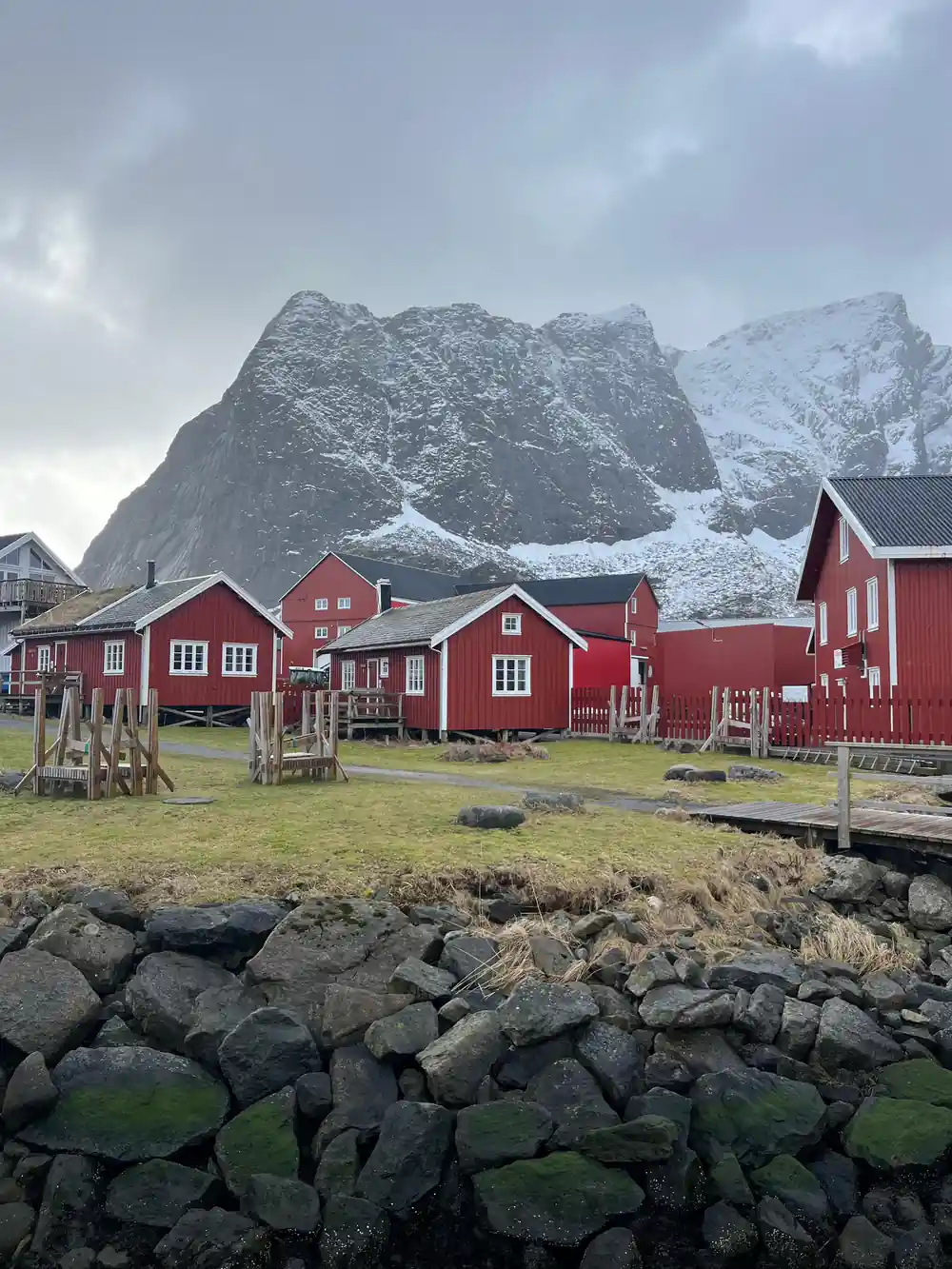
Many visitors underestimate how much time they spend on uneven ground. During the 9-hour tour, you'll walk the beach near Å i Lofoten, explore the rocks and rorbu cabins at Hamnøy, navigate the shoreline at Sakrisøy, and stand on sloped stone at Reine. Each of these requires firm footing. A secondary pair of waterproof shoes or sandals that strap tight (not flip-flops) is useful for changing into during the midday meal break, giving your feet relief and preventing blisters from forming. Neoprene booties add warmth but reduce tactile feedback; skip them unless you're visiting in deep winter when ice forms on rocks.
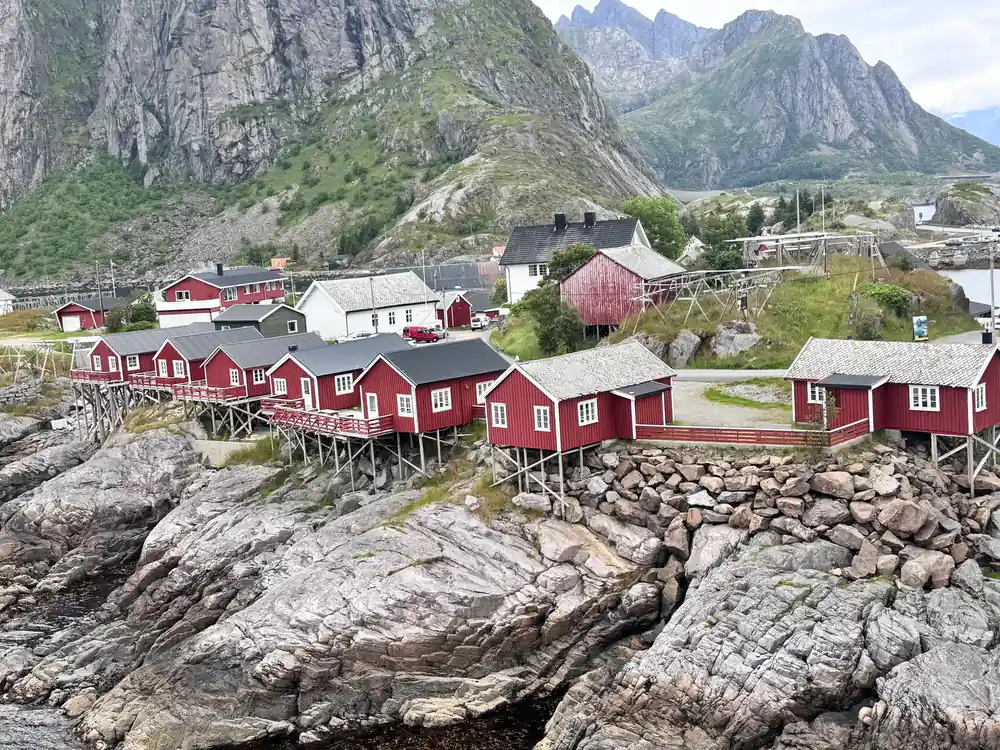
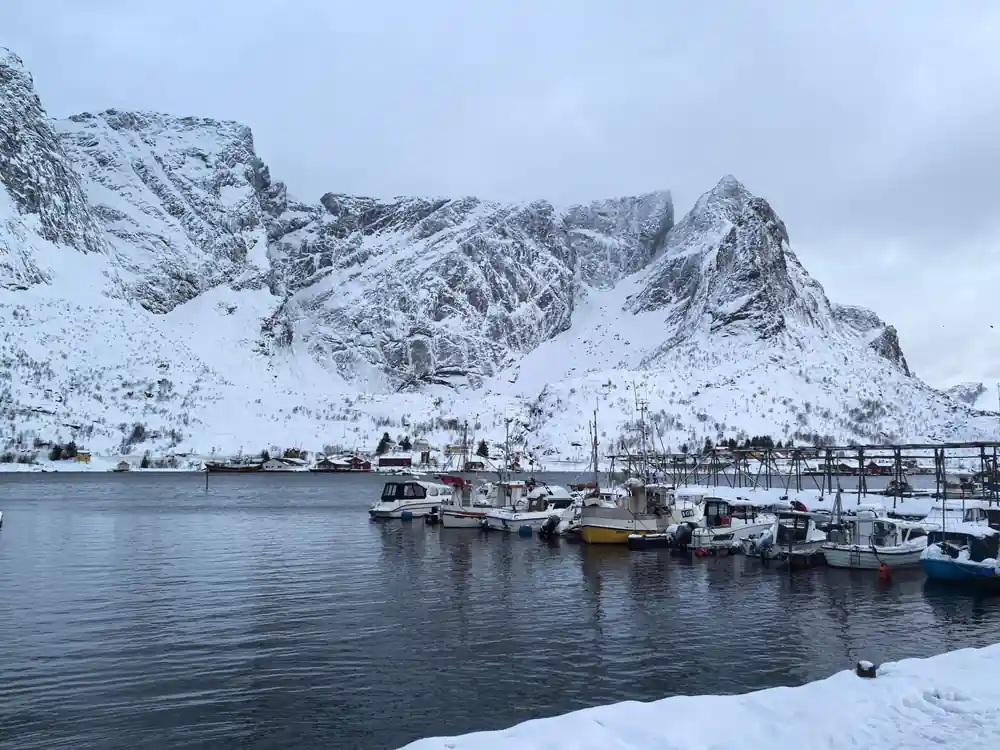
Waterproof jacket and grip-sole boots essential on Lofoten's wet harbours
Winter Layering When Temperatures Drop
Lofoten in winter operates under different rules. If you're touring between November and January, the air temperature can fall to 0°C or below, wind chill pushes the felt temperature much lower, and darkness at midday changes how cold your body perceives the conditions. Layering is not optional. Start with a merino wool or synthetic base layer that wicks sweat away from your skin; cotton holds moisture and will make you colder as soon as you stop moving. Add a midlayer fleece or wool sweater that traps dead air. Finally, wear the hardshell jacket over both. The principle is: remove or add layers before you feel cold, not after, because shivering means your core is already losing heat.
A key difference in winter is that nine hours in an unheated vehicle becomes a risk factor. Modern minivans have good heating, but if the driver keeps the temperature down for comfort or if you're sitting near a door, your legs and feet can cool faster than you realize. Wear insulated trousers, not jeans; denim retains moisture and loses insulating value when wet. Wool or synthetic long underwear underneath adds another layer of warmth without bulk. Bring an extra fleece or lightweight down jacket that you can pull on during the meal break or if the van's heating fails.
Gloves, Hat and Eye Protection in Arctic Light
Your hands and head lose heat faster than any other body part. Insulated gloves are mandatory; thin leather gloves or wool mittens without liners will not hold enough warmth for nine hours outdoors in Lofoten's climate. Look for gloves with a waterproof outer shell and a fleece or wool inner lining, or choose a heavy knit glove with a rubber grip on the palm. Touchscreen-compatible gloves let you operate your camera or phone without removing them, which keeps your hands in the warmth longer. Pack a second pair in case the first gets soaked.
A wool hat or balaclava that covers your ears is essential year-round; in winter, it becomes a survival item. Wind chill accelerates heat loss from your scalp, and exposed ears can develop frostbite or become so painful that you'll abandon outdoor activities. Sunglasses are not a luxury in Lofoten, even on cloudy days. The sun's UV rays reflect off water and light-coloured rock and sand, intensifying the dose even when cloud cover is thick. Snow and ice amplify glare dramatically. Bring sunglasses with UV protection and consider a pair with polarised lenses to cut water reflection near Reine and the beaches. A neck buff or scarf traps warmth around your core and can pull up to cover your lower face if wind intensifies.

Camera Gear in Salt Spray and Cold
Lofoten's villages are photogenic, and you will want to capture them. Salt spray from the sea corrodes camera bodies and lens coatings, so bring protective gear. A UV filter on your main lens is cheap insurance; replace it before the salt damages the lens underneath. Keep your camera inside your jacket or a waterproof bag when you're not actively shooting, especially near Hamnøy and Sakrisøy where spray reaches the rorbu cabins. Condensation is a silent killer: if you bring a warm camera into a cold minivan or step inside a heated cabin after shooting outdoors, moisture will form on the lens and sensor. Let your gear acclimate slowly or use sealed bags with silica gel packets to absorb condensation.
Batteries drain much faster in cold. A camera battery that lasts six hours at 15°C will last three hours at 0°C or lower. Carry two or three spare batteries and keep them in an inside pocket next to your body, where warmth maintains their charge. Touchscreen phones and cameras become sluggish in extreme cold and may shut down entirely at minus 10°C. A glove-friendly camera or a phone with a stylus helps. Bring spare memory cards in case one fails in the cold; digital cards are robust but not immune.
Daypack, Thermals and Headlamp in Polar Darkness
A small daypack (20 to 30 liters) beats trying to carry everything in your jacket pockets. It holds your spare layers, water bottle, snacks, sunscreen, and headlamp. Use a pack with a waterproof cover or lined with a dry bag insert. The minivan stores larger luggage, so your daypack carries only what you need during the stops at the 7 locations across Lofoten Islands. A pack with a chest strap and hip belt distributes weight evenly and keeps your hands free for balance on uneven ground.
In winter months when polar night or twilight dominates the day, a headlamp is practical, not optional. Even at midday in December, the light is dim and blue, making it hard to see your footing on rocks or in the rorbu villages. A headlamp with at least 200 lumens lets you navigate safely and illuminate details for photography. Use a red-light mode to preserve your night vision if you're out during the darkest hours. Pack a headlamp and spare batteries in your daypack and verify it works before the tour begins.
What to Leave Behind and Final Checklist
Lofoten's beauty lies in its raw landscape, and your packing should reflect that. Leave behind heavy luggage, excess shoes, and anything not rated for wet and wind. A single pair of quality hiking boots outperforms three pairs of casual shoes. A single waterproof jacket beats a collection of lighter layers that won't perform in sustained rain. Perfume and strong aftershave will blow away and are unnecessary in the fresh air. Avoid cotton clothing entirely; it retains moisture and loses warmth when wet.
Your final checklist before the 9-hour tour: waterproof jacket with sealed seams, insulated hiking boots, wool or synthetic base layer, midlayer fleece or wool, insulated gloves and a hat, sunglasses, a daypack, water bottle, snacks or energy bars, phone and camera with spare batteries, a headlamp if visiting in winter, and any medications or personal items you need. Dress in layers so you can adapt as you move between the van and the 7 stops across the islands, from Valgata 6 to Reine and back. Lofoten's weather is unpredictable, but proper gear makes every condition manageable and every moment outdoors enjoyable.
Ready to explore? Book your Lofoten adventure
from US$209Reserve now & pay later